Sheet Metal Fabrication
In Bradford.
Cut, folded and assembled sheet metal for commercial enclosures, trays, covers and repeat components.
Discuss this service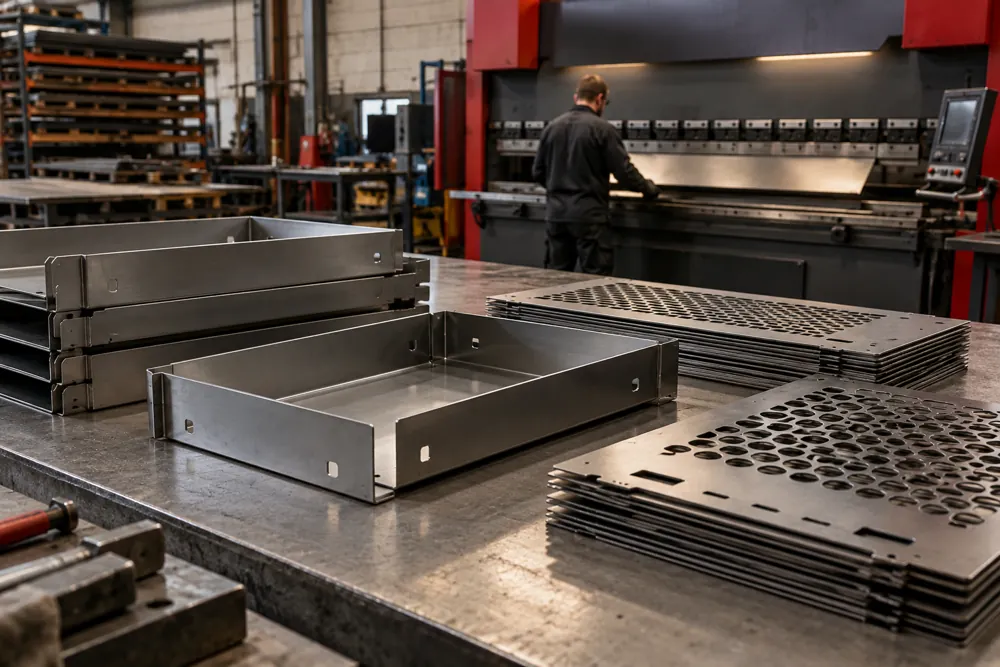
Sheet Metal Made Around The Finished Part
Sheet metal fabrication produces thin-gauge components by cutting flat material and forming it into a usable shape. Typical commercial enquiries include equipment covers, folded trays, enclosure panels, brackets and protective screens. The finished part needs to fit its surroundings and remain practical to assemble, clean and maintain.
For Bradford contractors and manufacturing buyers, the starting point is the required function. Explain what the panel covers, where it attaches and whether it will be removed during servicing. Include any exposure to moisture, chemicals, heat or impact so the material and finish can be considered together.
A flat pattern alone may leave important details unresolved. Provide the folded drawing or model as well, with the material, thickness and critical dimensions identified. State whether the supplied dimensions describe internal or external faces and which surfaces must align with other components.
Cutting, Folding And Joining
Cut profiles can include holes, slots, ventilation openings and assembly features. Their position matters in relation to bends and edges, because forming can affect nearby details. Discuss small holes, narrow flanges and closely spaced bends before treating a drawing as ready for manufacture.
Bend radii, springback and tooling access influence the achievable shape. A folded enclosure may need corner reliefs, seams or a separate panel to allow assembly. These are practical manufacturing decisions that should be approved on the detail drawing rather than discovered when the part is already cut.
Where joining is needed, agree whether the assembly uses welds, rivets, inserts or removable fasteners. A cover that requires regular access may need captive fixings and clearance around tools. Edges that people handle should be finished appropriately, with burr removal and edge condition included in the specification.
Requirements For Guards And Panels
A sheet metal cover used as a machinery guard must be assessed for its safety function. The Provision and Use of Work Equipment Regulations 1998 place duties on employers using work equipment. A new guard should not introduce openings, sharp edges or removal arrangements that undermine the existing protection.
Structural construction components require a different assessment from general enclosure panels. BS EN 1090 requirements may apply where the item performs a structural role within their scope. Tell us the intended use so the project team can establish the relevant technical and conformity requirements.
Welded sheet assemblies also need a suitable approach to fume control under COSHH. HSE guidance is relevant to workshop welding and any welding proposed at your site. For site activity, explain occupied areas, extraction constraints and permit requirements before choosing an installation method.
A Clear Production Sequence
First, review the drawing or model against the intended application and available assembly space. Next, settle material, thickness, surface finish and the important tolerances. For a new enclosure, checking a prototype against the actual equipment can be more useful than assuming a computer model includes every obstruction.
After drawing approval, the flat parts are cut and edges prepared. Forming and joining follow the agreed sequence, with checks on the assembled dimensions. Any cosmetic face should be identified before processing so handling and tooling marks can be managed against an agreed acceptance standard.
Finishing and packaging come last. Protective film, separation between panels and orientation during transport may matter for visible surfaces. At delivery, check the part references against the order and record any fit feedback before releasing a larger repeat batch.
What Changes The Quotation
Material type and gauge, cutting time, the number of bends and the complexity of assembly all affect sheet metal costs. Repeated parts can share setup work, but a larger batch still needs the same approved specification. Decorative finishes and demanding cosmetic standards should be quoted explicitly.
Avoid applying a tight tolerance to every dimension without explaining which ones control fit. A functional hole pattern may need closer checking than a free edge. Discuss the acceptance method too, especially where a folded part can flex before being fixed into its final assembly.
For a useful enquiry, include quantities, a drawing revision, material preference and the Bradford-area delivery location. Tell us whether the requirement is a prototype, a small batch or ongoing supply. We can then identify the questions that need resolving before manufacture is priced.
Your Questions Answered
What Files Help With Sheet Metal Fabrication?
Sheet metal fabrication enquiries are easier to assess with a dimensioned PDF and a suitable CAD file or model where available. Include the folded shape, material, thickness, quantity and drawing revision. Highlight critical interfaces and cosmetic faces so manufacturing decisions can be checked against the finished part’s actual purpose.
Can Folded Panels Be Supplied As A Trial Batch?
Folded panels can be scoped as a trial batch before repeat manufacture. Agree the dimensions, finish and fit checks that determine acceptance, then record any changes on the drawing. A trial is especially useful for equipment covers, access panels and assemblies where the available installation space has not been fully documented.
Project Guidance
Requirements depend on the application. Confirm the specification and supplier evidence for your project.
Related Steelwork Services
Have A Steelwork Project In Mind?
Send the site location, scope and any drawing details. We will help you identify the next step.