Welding & Fabrication
In Bradford.
Welding for Bradford commercial assemblies and repairs, with the joint specification, metal and working conditions assessed together.
Discuss this service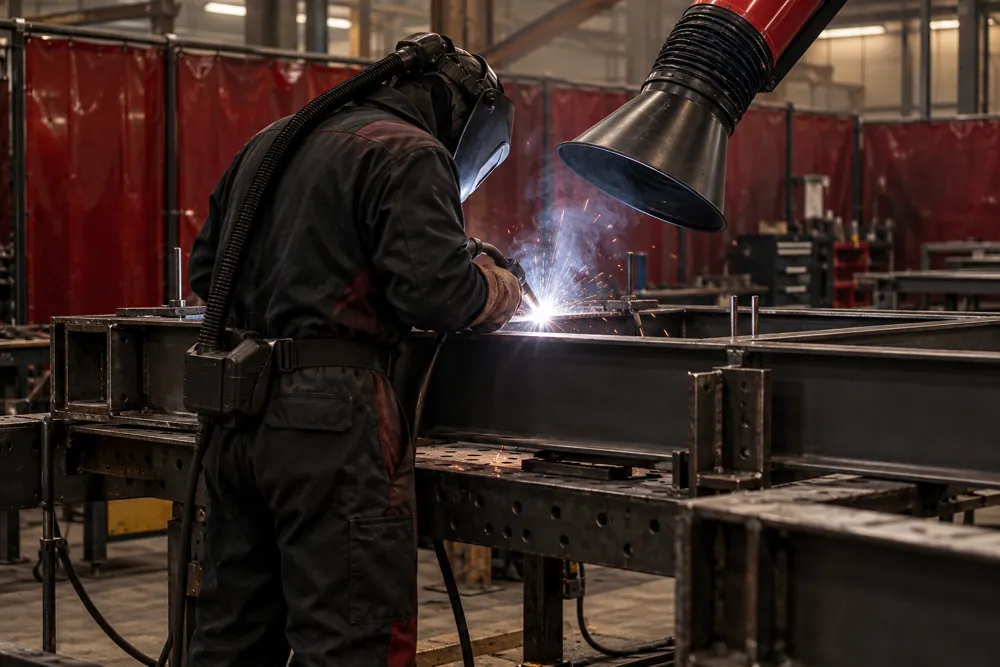
A Weld Is Part Of A Working Assembly
Welding and fabrication join components into frames, supports and finished metalwork. The right approach depends on the metal, joint design, loads and access to the weld. For Bradford commercial sites, enquiries can range from a new workshop assembly to a proposed repair on existing equipment.
A repair needs assessment before anyone starts grinding or welding. Cracking, corrosion, fatigue or distortion can indicate a wider problem that a new weld will not solve. Tell us how the component is used, what failed and whether it has already been modified.
We help scope the information needed for a suitable fabrication or repair discussion. Send photographs, material details if known and a description of the operating conditions. Safety-critical or load-bearing repairs need approval from the responsible competent designer before work is instructed.
Joint Preparation And Access
For a Bradford fabrication or repair enquiry, the weld drawing needs to show the metal specification, joint shape and service loads. Edge preparation, access, alignment and restraint affect whether the specified joint can be made properly. Paint, oil, galvanised coatings and other surface contamination can create both quality and exposure issues that need planning.
For new assemblies, workshop fabrication can give better control of preparation and positioning than an awkward site weld. Consider whether a component can be removed for repair or replaced as a complete assembly. The decision should account for safe isolation, handling and the effect on the rest of the equipment.
The inspection requirement should be agreed before the joint is made. Some projects need only defined visual and dimensional checks, while others specify additional testing. The responsible designer should identify acceptance criteria and any specialist inspection so the quotation includes the right work.
Welding Fume And Safe Work
HSE guidance requires welding fume risks to be assessed and controlled. Under COSHH, the control measures depend on the activity, material and location. Suitable extraction and respiratory protection need consideration, including the protection of people working nearby.
A site welding proposal must also address the surroundings. Combustible materials, hidden voids, stored products and other contractors can affect the permitted work. Agree isolation, screening and any site hot-work permit procedure with the responsible facilities or construction team before attendance.
For load-bearing construction components, BS EN 1090-2 provides technical execution requirements within its scope. Structural product conformity requirements also need to be checked where applicable. A general repair enquiry should not assume a particular welding approval, certification or testing arrangement until these have been verified for the proposed supplier and task.
How A Welding Enquiry Progresses
First, identify the component, metal and intended use. For repairs, establish the failure history and whether continued use has been assessed as safe. Where the item is part of machinery, the equipment owner should arrange isolation and a competent review of any change to its safety function.
Next, agree the design or repair detail and decide whether workshop or site work is appropriate. Specify preparation, welding access, distortion limits and inspection. An item that cannot be reached, isolated or cleaned safely may need a different repair strategy or replacement instead.
Before a welded assembly is released for a Bradford workshop or site, check it against the acceptance criteria agreed for that job. Any removed protective coating needs a specified repair system. Before the item returns to service, the responsible party should complete the required checks and retain the repair information with the equipment or project records.
Cost And Information To Send
Welding costs depend on preparation, joint length and complexity, material thickness, position and inspection requirements. A repair can involve more assessment and preparation than the visible weld suggests. Site restrictions, isolation time and access equipment can also form separate parts of the quotation.
Do not compare repair proposals solely by the amount of welding described. Check whether the cause of failure, design approval, cleaning, inspection and coating reinstatement are included. An inexpensive weld is not a useful repair if the original fault remains or the assembly cannot be checked properly.
Use the enquiry form to explain the commercial application, postcode and condition of the component. Include whether drawings are available and whether the equipment is currently isolated. We can then identify the next technical questions, with no assumption that a repair is suitable until the relevant assessment has been completed.
Your Questions Answered
Can Cracked Steel Be Welded Back Into Service?
Cracked steel needs assessment before a repair is chosen, because the crack may indicate fatigue, overload or a design problem. Provide the component’s use, material, photographs and failure history. A competent person must determine the repair detail and required checks before any safety-critical assembly is returned to service.
Is Workshop Welding Better Than Site Welding?
Workshop welding can offer more controlled preparation, positioning and fume extraction, but the best location depends on the assembly and safe handling options. Site welding may suit fixed components where risks can be controlled. Explain access, isolation and surrounding activities so the method can be assessed before a quotation is agreed.
Project Guidance
Requirements depend on the application. Confirm the specification and supplier evidence for your project.
Related Steelwork Services
Have A Steelwork Project In Mind?
Send the site location, scope and any drawing details. We will help you identify the next step.